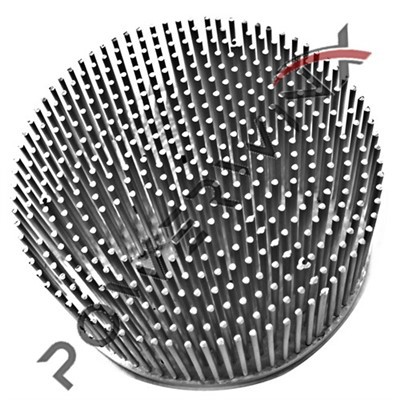
Aluminum extrusion heat sinks are widely used thermal management solutions designed to dissipate heat efficiently from various electronic and industrial components. These heat sinks are manufactured by forcing aluminum alloy through a specially designed die, producing precise shapes with extended surface areas for improved heat transfer. They offer a cost-effective, scalable, and highly customizable solution for cooling applications in industries such as electronics, automotive, and renewable energy systems. By using high-quality aluminum, the extrusion process delivers consistent performance, making it one of the most popular methods for producing heat sinks.


Material: Al 6063
Aluminum alloy Al 6063 is the material of choice for many extrusion heat sinks due to its excellent thermal conductivity, corrosion resistance, and superior surface finish. This alloy is known for its good mechanical strength, high workability, and excellent anodizing properties, making it ideal for applications requiring both performance and aesthetic appeal. Its balanced combination of strength and thermal efficiency ensures optimal performance in demanding cooling applications.
Product Features
High Thermal Conductivity
Ensures efficient heat dissipation from high-power devices.
01
Design Flexibility
Extrusion allows for complex and custom shapes to maximize surface area.
02
Cost-Effective Production
Suitable for high-volume manufacturing with consistent quality.
03
Excellent Surface Finish
Al 6063 provides a smooth surface ideal for anodizing or painting.
04
Corrosion Resistance
Durable performance even in harsh environmental conditions.
05
Products Application
Aluminum extrusion heat sinks are used in a variety of industries, including:
- Consumer Electronics: Cooling for CPUs, GPUs, amplifiers, and LED drivers.
- Industrial Equipment: Power supplies, automation controls, and electrical panels.
- Renewable Energy: Solar inverters and wind turbine control systems.
- Automotive: Electric vehicle battery systems, chargers, and ECUs.
- Telecommunications: Base stations, network hardware, and signal amplifiers.

The extrusion process begins with heating an aluminum billet of Al 6063 to a specific temperature before forcing it through a steel die to form the desired profile. The extruded length is then cooled, straightened, and cut to the required size. Additional machining processes such as drilling, tapping, or milling may be performed to meet specific design requirements. Surface treatments like anodizing enhance both the corrosion resistance and appearance of the heat sink. Quality control ensures consistent dimensional accuracy, fin alignment, and optimal thermal performance.
PowerWinx is a trusted manufacturer of high-quality thermal management products, specializing in aluminum and copper heat sinks, including advanced extrusion designs. The company offers customized solutions tailored to customer needs . With a focus on quality, innovation, and customer satisfaction, PowerWinx serves a wide range of industries worldwide.
FAQ
Q: Why is Al 6063 preferred for extrusion heat sinks?
A: It offers a good balance of thermal conductivity, mechanical strength, and excellent anodizing properties.
Q: Can aluminum extrusion heat sinks be customized?
A: Yes, extrusion profiles can be tailored to specific designs, sizes, and thermal performance requirements.
Q: How are extrusion heat sinks finished?
A: They are often anodized for corrosion resistance and enhanced thermal radiation, but powder coating or painting is also possible.
Q: Are they suitable for outdoor applications?
A: Yes, with proper surface treatment, Al 6063 extrusion heat sinks can withstand harsh weather conditions.
Q: What is the maximum size for an extrusion heat sink?
A: The size is limited by the extrusion press capacity and die design, but large profiles can be produced for industrial applications.
Hot Tags: aluminum extrusion heat sink, China aluminum extrusion heat sink manufacturers, suppliers, low profile heatsink, Round Aluminum Heatsink, nvme m 2 ssd heatsink, snowman heatsink, m 2 motherboard heatsink, heat dissipation fan