Hey there! As a supplier of Bonded Fin Heat Sinks, I've seen firsthand how important it is to test the performance of these heat sinks. In this blog, I'll share with you some practical ways to test the performance of a bonded fin heat sink, and also give you a bit of background on the different types of heat sinks we offer.
Why Test Bonded Fin Heat Sinks?
Before we dive into the testing methods, let's talk about why testing is so crucial. Bonded fin heat sinks are used to dissipate heat from electronic components. If they don't work effectively, it can lead to overheating, which can damage the components and reduce their lifespan. By testing the performance of these heat sinks, we can ensure that they meet the requirements of our customers and work efficiently in real - world applications.
Types of Bonded Fin Heat Sinks
We offer a variety of bonded fin heat sinks, and it's important to understand the differences between them.
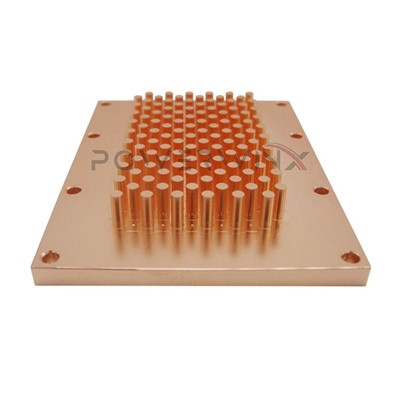
One type is the Copper Pin Fin Heat Sink. Copper is an excellent conductor of heat, and the pin fin design provides a large surface area for heat dissipation. These heat sinks are great for applications where high heat transfer is required.
Another option is the Copper Skived Fin Heat Sink. Skived fins are created by shaving thin layers of copper to form fins. This process results in a very efficient heat transfer design, and these heat sinks are often used in high - power electronic devices.
We also have Aluminum Extrusion Heat Sink. Aluminum is a lightweight and cost - effective material, and extrusion allows for the creation of complex shapes. These heat sinks are widely used in a variety of applications due to their affordability and good heat dissipation properties.
Testing Methods
Thermal Resistance Testing
Thermal resistance is one of the most important parameters to measure when testing a bonded fin heat sink. It measures how well the heat sink can transfer heat from the source to the surrounding environment.
To test thermal resistance, we use a thermal test setup. First, we attach a heat source to the base of the heat sink. This heat source can be a heater that simulates the heat generated by an electronic component. We then measure the temperature at the base of the heat sink and the temperature of the surrounding air.
The thermal resistance (Rth) is calculated using the formula: Rth = (Tbase - Tair) / Q, where Tbase is the temperature at the base of the heat sink, Tair is the temperature of the surrounding air, and Q is the heat input. A lower thermal resistance means that the heat sink is more efficient at transferring heat.
Airflow Testing
Airflow plays a crucial role in the performance of a heat sink. Good airflow helps to carry away the heat from the fins of the heat sink.
We can use an anemometer to measure the airflow around the heat sink. First, we set up a fan to blow air through the heat sink. Then, we place the anemometer at different points around the heat sink to measure the air velocity.


We also need to consider the pressure drop across the heat sink. A high - pressure drop can reduce the airflow and affect the heat dissipation performance. We can use a manometer to measure the pressure difference between the inlet and the outlet of the heat sink.
Heat Transfer Coefficient Testing
The heat transfer coefficient (h) is a measure of how well the heat sink can transfer heat to the surrounding air. It depends on factors such as the surface area of the fins, the airflow, and the properties of the air.
To measure the heat transfer coefficient, we use a combination of thermal resistance and airflow data. We can calculate the heat transfer coefficient using the formula: h = Q / (A * (Tbase - Tair)), where A is the surface area of the heat sink.
Material Quality Testing
The quality of the materials used in the bonded fin heat sink also affects its performance. We need to test the thermal conductivity of the materials, such as copper or aluminum.
We can use a thermal conductivity meter to measure the thermal conductivity of the materials. This helps us ensure that the materials meet the required standards and can effectively transfer heat.
Real - World Testing
In addition to the laboratory tests, we also conduct real - world testing. We install the heat sinks in actual electronic devices and monitor their performance over time. This helps us understand how the heat sinks perform in real - world conditions and identify any potential issues.
Conclusion
Testing the performance of a bonded fin heat sink is essential to ensure its efficiency and reliability. By using a combination of thermal resistance testing, airflow testing, heat transfer coefficient testing, and material quality testing, we can accurately evaluate the performance of our heat sinks.
If you're in the market for high - quality bonded fin heat sinks, we'd love to have a chat with you. Whether you need a Copper Pin Fin Heat Sink, a Copper Skived Fin Heat Sink, or an Aluminum Extrusion Heat Sink, we've got you covered. Contact us to discuss your specific requirements and let's work together to find the best thermal solution for your needs.
References
- Incropera, F. P., & DeWitt, D. P. (2002). Fundamentals of Heat and Mass Transfer. John Wiley & Sons.
- Holman, J. P. (2010). Heat Transfer. McGraw - Hill.