In the world of thermal management, pin fin heat sinks have long been a cornerstone of efficient heat dissipation. As technology advances and the demand for quieter operating environments grows, the question on many engineers' and designers' minds is: Are there any silent pin fin heat sinks available? As a leading pin fin heat sink supplier, we're here to explore this topic in depth and shed light on the solutions we offer.
The Need for Silent Heat Sinks
In modern electronic devices, from high - performance computers to industrial control systems, heat generation is a significant concern. Excessive heat can lead to reduced component lifespan, decreased performance, and even system failures. Pin fin heat sinks are designed to address this issue by increasing the surface area available for heat transfer, allowing heat to dissipate more effectively into the surrounding environment.
However, traditional heat sinks often rely on fans to enhance the airflow and thus improve heat dissipation. While fans can be effective in moving large volumes of air, they also generate noise. In applications where noise levels need to be kept to a minimum, such as in audio equipment, home appliances, or library servers, the noise from a fan - cooled heat sink can be a major drawback. This is where silent pin fin heat sinks come into play.
How Silent Pin Fin Heat Sinks Work
Silent pin fin heat sinks operate on the principle of passive heat dissipation. Instead of using a fan to force air movement, they rely on natural convection. Natural convection occurs when the heated air around the heat sink rises due to its lower density compared to the cooler surrounding air. As the hot air rises, cooler air rushes in to take its place, creating a continuous flow of air over the heat sink's surface.
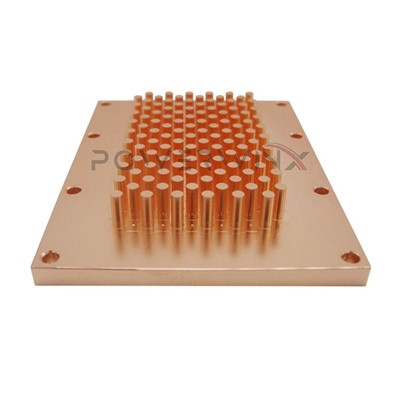
The design of pin fin heat sinks is crucial for effective passive heat dissipation. The pins, which are typically made of a thermally conductive material such as aluminum or copper, provide a large surface area for heat transfer. The shape, density, and length of the pins can all be optimized to maximize the natural convection process. For example, longer and more closely spaced pins can increase the surface area, but they may also restrict the airflow. A careful balance needs to be struck to ensure efficient heat transfer without impeding the natural movement of air.
Our Offerings as a Pin Fin Heat Sink Supplier
As a trusted supplier of pin fin heat sinks, we offer a range of silent options to meet the diverse needs of our customers. Our products are designed and manufactured using the latest technologies and high - quality materials to ensure optimal performance.
One of our key offerings is the Aluminum Die Cast LED Light Heat Sink. These heat sinks are specifically designed for LED lighting applications, where silent operation is essential. The die - casting process allows for complex shapes and precise designs, enabling us to create heat sinks with high pin densities and excellent thermal conductivity. The aluminum material provides good heat transfer properties while being lightweight and corrosion - resistant.
We also offer Aluminum Cold Forged Heat Sink. Cold forging is a manufacturing process that results in a denser and stronger material structure compared to other methods. This leads to improved thermal conductivity and mechanical strength. Our cold - forged pin fin heat sinks are suitable for a wide range of applications, including power electronics and telecommunications equipment, where silent and efficient heat dissipation is required.
Another product in our portfolio is the Aluminum Zipper Fin Heat Sinks. These heat sinks feature a unique zipper - like fin design that increases the surface area available for heat transfer. The open structure of the zipper fins allows for better natural convection, making them an ideal choice for silent heat dissipation applications. The aluminum construction ensures high thermal conductivity and durability.
Performance and Advantages of Silent Pin Fin Heat Sinks
When it comes to performance, silent pin fin heat sinks have several advantages. Firstly, they offer reliable heat dissipation without the added noise of a fan. This makes them suitable for applications where a quiet environment is a priority. Secondly, since they have no moving parts, they require less maintenance and have a longer lifespan compared to fan - cooled heat sinks. There is no risk of fan failure, which can lead to overheating and system damage.
In addition, silent pin fin heat sinks are more energy - efficient. Without the need to power a fan, they consume less electricity, which can result in cost savings over time, especially in large - scale applications. They are also more environmentally friendly, as they produce less noise pollution and have a lower carbon footprint due to reduced energy consumption.
Considerations When Choosing a Silent Pin Fin Heat Sink
When selecting a silent pin fin heat sink for your application, there are several factors to consider. The first is the heat dissipation requirements. You need to determine the amount of heat that needs to be removed from the device and choose a heat sink with an appropriate thermal resistance. This can be calculated based on the power dissipation of the component and the allowable temperature rise.
The size and shape of the heat sink also matter. It should fit within the available space in your device and be compatible with the mounting requirements. The orientation of the heat sink can also affect the natural convection process, so it's important to ensure that it is installed in a way that allows for optimal airflow.
Another consideration is the material of the heat sink. Aluminum is a popular choice due to its good thermal conductivity, low cost, and lightweight properties. Copper has even higher thermal conductivity but is more expensive and heavier. The choice of material will depend on your specific application and budget.
Real - World Applications
Silent pin fin heat sinks have a wide range of real - world applications. In the consumer electronics industry, they are used in laptops, tablets, and smart TVs. These devices need to dissipate heat quietly to provide a comfortable user experience. In the medical field, silent heat sinks are used in equipment such as ultrasound machines and patient monitors, where noise can be a distraction for both patients and medical staff.
In the automotive industry, silent pin fin heat sinks are used in electric vehicle charging stations, onboard chargers, and power electronics. As the demand for electric vehicles grows, the need for efficient and silent thermal management solutions becomes increasingly important.
Conclusion
In conclusion, yes, there are silent pin fin heat sinks available, and we, as a pin fin heat sink supplier, are committed to providing high - quality solutions to meet your thermal management needs. Our range of products, including the Aluminum Die Cast LED Light Heat Sink, Aluminum Cold Forged Heat Sink, and Aluminum Zipper Fin Heat Sinks, offer excellent performance, reliability, and energy efficiency.
If you are in the process of selecting a heat sink for your application and are interested in silent solutions, we encourage you to contact us for more information. Our team of experts can help you choose the right heat sink based on your specific requirements and provide you with detailed technical support. Let's work together to find the best thermal management solution for your project.


References
- Incropera, F. P., DeWitt, D. P., Bergman, T. L., & Lavine, A. S. (2007). Fundamentals of Heat and Mass Transfer. Wiley.
- Kays, W. M., Crawford, M. E., & Weigand, B. (2005). Convective Heat and Mass Transfer. McGraw - Hill.