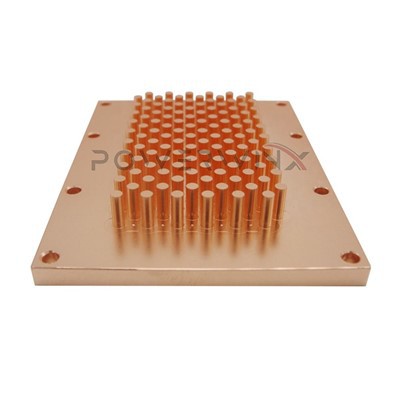
As a seasoned supplier of Stacked Fin Heat Sinks, I've witnessed firsthand the crucial role that the fin material plays in determining the heat sink's corrosion resistance. In this blog, I'll delve into the various materials used for fins in stacked fin heat sinks and explore how they impact the overall corrosion resistance of these essential thermal management components.
Understanding Corrosion in Heat Sinks
Before we dive into the specific materials, it's important to understand what corrosion is and why it's a concern in heat sinks. Corrosion is a natural process that occurs when a metal reacts with its environment, typically oxygen and moisture, to form metal oxides or other compounds. In the context of heat sinks, corrosion can lead to several issues, including reduced thermal performance, structural integrity, and overall lifespan.
When a heat sink corrodes, the oxide layer that forms on the surface can act as an insulator, reducing the heat transfer efficiency between the fins and the surrounding air. This can result in higher operating temperatures, which can negatively impact the performance and reliability of the electronic components being cooled. Additionally, corrosion can cause the fins to become brittle and break, further compromising the heat sink's effectiveness.


Common Materials Used for Fins in Stacked Fin Heat Sinks
There are several materials commonly used for fins in stacked fin heat sinks, each with its own unique properties and corrosion resistance characteristics. Let's take a closer look at some of the most popular materials:
Aluminum
Aluminum is one of the most widely used materials for fins in stacked fin heat sinks due to its excellent thermal conductivity, lightweight, and relatively low cost. Aluminum has a natural oxide layer that forms on its surface when exposed to air, which provides some degree of corrosion resistance. However, this oxide layer can be damaged or removed by certain chemicals, abrasion, or high humidity, leaving the aluminum vulnerable to corrosion.
To improve the corrosion resistance of aluminum fins, they are often coated with a protective layer, such as anodizing or powder coating. Anodizing is an electrochemical process that creates a thicker and more durable oxide layer on the surface of the aluminum, while powder coating involves applying a dry powder to the fins and then baking it to form a hard, protective finish. These coatings can significantly enhance the corrosion resistance of aluminum fins, making them suitable for a wide range of applications.
Copper
Copper is another popular material for fins in stacked fin heat sinks, known for its superior thermal conductivity compared to aluminum. Copper also has good corrosion resistance, thanks to its ability to form a thin, protective oxide layer on its surface. However, copper is more susceptible to corrosion in certain environments, such as those with high levels of sulfur or chloride.
To improve the corrosion resistance of copper fins, they can be coated with a layer of nickel or tin. These coatings act as a barrier between the copper and the environment, preventing corrosion from occurring. Additionally, copper fins can be treated with a passivation solution to further enhance their corrosion resistance.
Stainless Steel
Stainless steel is a corrosion-resistant alloy that contains chromium, nickel, and other elements. Stainless steel fins are often used in applications where high corrosion resistance is required, such as in marine or chemical environments. Stainless steel has a natural oxide layer that forms on its surface, which provides excellent protection against corrosion.
However, stainless steel has lower thermal conductivity compared to aluminum and copper, which can limit its effectiveness as a heat sink material. To overcome this limitation, stainless steel fins are often used in combination with other materials, such as aluminum or copper, to improve the overall thermal performance of the heat sink.
Factors Affecting Corrosion Resistance
In addition to the material of the fins, there are several other factors that can affect the corrosion resistance of a stacked fin heat sink. These factors include:
Environment
The environment in which the heat sink is used plays a significant role in determining its corrosion resistance. Heat sinks used in harsh environments, such as those with high levels of humidity, salt, or chemicals, are more likely to corrode than those used in clean, dry environments. To ensure the long-term performance of the heat sink, it's important to choose a material and coating that are suitable for the specific environment.
Surface Finish
The surface finish of the fins can also affect their corrosion resistance. A smooth, polished surface is less likely to accumulate dirt, moisture, and other contaminants, which can reduce the risk of corrosion. Additionally, a surface finish that is resistant to abrasion and scratching can help to protect the underlying material from damage, further enhancing its corrosion resistance.
Design
The design of the heat sink can also impact its corrosion resistance. Heat sinks with a complex design or tight spacing between the fins can make it more difficult to clean and maintain, increasing the risk of corrosion. Additionally, heat sinks that are exposed to direct sunlight or other sources of heat can experience thermal expansion and contraction, which can cause the fins to become loose or damaged, further compromising their corrosion resistance.
Importance of Corrosion Resistance in Stacked Fin Heat Sinks
Corrosion resistance is a critical factor to consider when selecting a stacked fin heat sink for your application. A heat sink that is prone to corrosion can lead to several issues, including reduced thermal performance, structural integrity, and overall lifespan. By choosing a heat sink with high corrosion resistance, you can ensure that it will continue to perform effectively over the long term, even in harsh environments.
In addition to improving the performance and reliability of the heat sink, corrosion resistance can also help to reduce maintenance costs and downtime. A heat sink that is resistant to corrosion is less likely to require frequent cleaning, replacement, or repair, which can save you time and money in the long run.
Conclusion
In conclusion, the material of the fins in a stacked fin heat sink plays a crucial role in determining its corrosion resistance. Aluminum, copper, and stainless steel are all popular materials for fins, each with its own unique properties and corrosion resistance characteristics. By understanding the factors that affect corrosion resistance and choosing a material and coating that are suitable for your specific application, you can ensure that your heat sink will provide reliable and efficient thermal management for years to come.
If you're in the market for a high-quality stacked fin heat sink with excellent corrosion resistance, we invite you to explore our range of products. We offer a variety of Copper Skived Fin Heat Sink, Extruded Aluminum Heat Sink, and Pin Fin Heat Sink options to meet your specific needs. Contact us today to discuss your requirements and learn more about how we can help you find the perfect heat sink solution for your application.
References
- ASM Handbook, Volume 13A: Corrosion: Fundamentals, Testing, and Protection. ASM International, 2003.
- Metals Handbook: Properties and Selection: Nonferrous Alloys and Pure Metals. ASM International, 1990.
- Thermal Management Handbook for Electronic Packaging. McGraw-Hill, 2003.