What is the impact of the fin material on an extruded heat sink's performance?
Hey there! As a supplier of extruded heat sinks, I've seen firsthand how the choice of fin material can make or break a heat sink's performance. In this blog, I'll dive into the nitty - gritty of how different fin materials affect an extruded heat sink's ability to cool things down.
Why Fins Matter in Heat Sinks
Before we talk about the materials, let's quickly understand why fins are so important in heat sinks. Fins are basically extensions on the heat sink that increase its surface area. The larger the surface area, the more heat can be dissipated into the surrounding air. You can think of it like if you're trying to dry a wet towel. A flat single - layer towel will take ages to dry, but if you fold it into many layers (like fins), it'll dry much faster because more of the towel's surface is exposed to the air.
Common Fin Materials and Their Impact
Aluminum
Aluminum is hands - down the most popular material for extruded heat sink fins. And there's a good reason for that. First off, it has excellent thermal conductivity. Thermal conductivity is a measure of how well a material can transfer heat. Aluminum can quickly move heat from the base of the heat sink (where it's in contact with the hot component) to the fins, so the heat can be released into the air.
Another great thing about aluminum is that it's lightweight. In a lot of industries, like electronics and automotive, weight is a big concern. Using aluminum fins helps keep the overall weight of the heat sink down, which is a huge plus.
Moreover, aluminum is relatively easy to extrude. Extrusion is the process of creating the heat sink's shape. Aluminum's malleability means we can create complex fin designs, like thin, closely - spaced fins. We offer Aluminum Extrusion Heat Sink which leverage the benefits of aluminum to provide efficient cooling.
However, aluminum does have its drawbacks. It's not as strong as some other metals, so in high - vibration or high - stress environments, the fins might get damaged more easily.
Copper
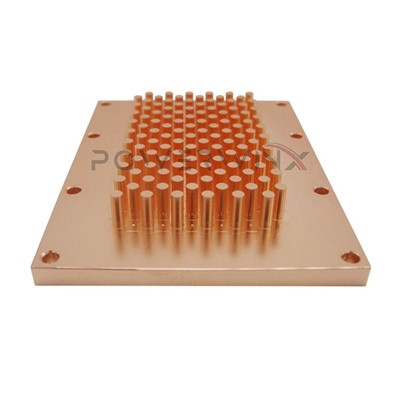
Copper is another heavyweight (pun intended) in the heat sink world. It has even better thermal conductivity than aluminum. This means it can transfer heat even faster, which is a massive advantage when dealing with high - power components that generate a ton of heat.
Copper is also more durable than aluminum. It can withstand more mechanical stress, making it suitable for harsh environments. But there's a catch. Copper is much heavier than aluminum. In applications where weight is a strict limitation, using copper fins might not be feasible.
Also, copper is more expensive. The cost of raw copper and the manufacturing processes associated with it can drive up the price of the heat sink. Despite these downsides, for applications where high - end cooling performance is non - negotiable, copper finned heat sinks are a top choice.
Steel
Steel is not as commonly used for heat sink fins as aluminum or copper, but it does have its own unique properties. Steel is incredibly strong. It can handle a lot of mechanical abuse, making it a great option for industrial applications where the heat sink might be exposed to rough handling or vibrations.


However, steel's thermal conductivity is much lower compared to aluminum and copper. This means it's not very efficient at transferring heat. So, if you're using steel fins, you might need a much larger heat sink with more fins to achieve the same level of cooling as an aluminum or copper heat sink.
Impact on Cooling Efficiency
The choice of fin material plays a huge role in the cooling efficiency of an extruded heat sink. As we've seen, materials with high thermal conductivity like copper and aluminum can transfer heat quickly from the heat - generating component to the fins. Once the heat reaches the fins, it can be dissipated into the air more efficiently.
For example, if you're using a high - power CPU in a computer, an aluminum or copper finned heat sink will be able to cool it down much faster than a steel finned one. This is because the high thermal conductivity allows the heat to spread out across the fins rapidly, and then the large surface area of the fins can release the heat to the surrounding air.
Impact on Cost
Cost is always a factor when it comes to choosing a heat sink. Aluminum is generally the most cost - effective option. The raw material is relatively inexpensive, and the extrusion process is well - established and efficient, which keeps the manufacturing costs down. This makes aluminum - finned heat sinks a popular choice for a wide range of applications, from consumer electronics to automotive systems.
Copper, on the other hand, is more expensive. The high cost of the raw material combined with the more complex manufacturing processes (due to its higher density) means that copper - finned heat sinks are usually pricier. They're often used in high - end applications where the performance benefits justify the extra cost.
Steel's cost can vary. While the raw material might be relatively cheap, the large size and increased number of fins required to achieve good cooling performance can offset the initial savings.
Impact on Physical Properties
The fin material also affects the physical properties of the heat sink. As mentioned earlier, aluminum is lightweight, which is great for reducing the overall weight of the device that the heat sink is used in. This is crucial in applications like aerospace and portable electronics.
Copper's weight can be a problem in weight - sensitive applications. But its strength and high thermal conductivity make it ideal for high - power, high - stress environments.
Steel's strength gives it an edge in industrial settings. But its poor thermal conductivity means that it might not be suitable for applications that require rapid cooling.
Other Considerations
There are other factors to think about when choosing a fin material. For example, corrosion resistance. Aluminum can form a thin oxide layer on its surface, which helps protect it from corrosion. This makes it suitable for applications where it might be exposed to moisture or harsh chemicals.
Copper can also resist corrosion to some extent, but in certain environments, it might require additional coatings to prevent tarnishing and corrosion. Steel, on the other hand, is prone to rusting and usually needs to be coated or treated to enhance its corrosion resistance.
Conclusion
So, in a nutshell, the fin material has a profound impact on an extruded heat sink's performance. Whether you're looking at cooling efficiency, cost, physical properties, or corrosion resistance, each material has its own strengths and weaknesses.
If you're in the market for Aluminum Folded Fin Heat Sink, Aluminum Extrusion Heat Sink or Soldering Heat Sink, we can help you make the right choice based on your specific needs. We've got a wide range of heat sinks, and we'd love to chat with you about your requirements. Reach out to us and let's start a conversation about getting the perfect heat sink for your application.
References
- "Thermal Management Handbook" - An industry resource that details the properties of different heat sink materials.
- "Advanced Heat Sink Design" - A research book that delves into the design and material selection for heat sinks.
- Industry reports from leading thermal management research firms