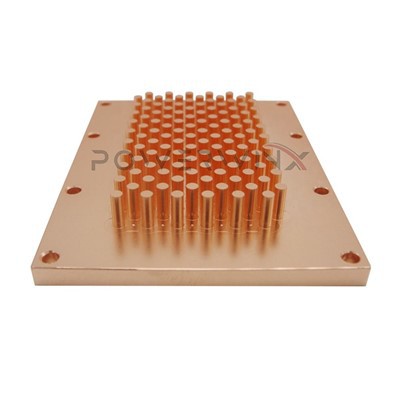
Hey there! As a supplier of round aluminum heatsinks, I've been getting a lot of questions lately about how the surface roughness of these heatsinks affects heat dissipation. So, I thought I'd take a deep dive into this topic and share some insights with you all.
First off, let's talk about what surface roughness actually means. Surface roughness refers to the irregularities on the surface of an object. In the case of a round aluminum heatsink, these irregularities can be tiny bumps, scratches, or pits. The roughness is typically measured in terms of the average height of these irregularities, usually in micrometers (μm).
Now, you might be wondering, why does surface roughness matter when it comes to heat dissipation? Well, it all boils down to the way heat is transferred. There are three main methods of heat transfer: conduction, convection, and radiation. In the context of a heatsink, conduction and convection are the most relevant.
Conduction is the transfer of heat through a solid material. When a heatsink is in contact with a heat source, like a CPU or a power transistor, heat is conducted from the source to the heatsink. The surface roughness can affect this process. A smoother surface generally has better contact with the heat source, which means less thermal resistance. Thermal resistance is like a roadblock to heat flow - the lower the resistance, the easier it is for heat to move from the source to the heatsink.
On the other hand, a rougher surface might have air gaps between the heatsink and the heat source. Air is a poor conductor of heat, so these gaps increase the thermal resistance and slow down the conduction process. This can lead to higher temperatures in the heat source, which is not good for its performance and lifespan.
But it's not all bad news for rough surfaces. When it comes to convection, which is the transfer of heat through a fluid (like air), a rougher surface can actually be an advantage. Convection occurs when the heated air around the heatsink rises and is replaced by cooler air. A rough surface increases the surface area of the heatsink that is exposed to the air. More surface area means more contact between the heatsink and the air, which enhances the convection process.
Increased surface area allows for more heat to be transferred from the heatsink to the air. Think of it like a sponge - a sponge with more holes (or in this case, a rougher surface) can absorb more water (or heat) than a smooth one. So, while a rough surface might hinder conduction, it can boost convection.
Now, let's look at some real - world implications. In applications where the heatsink is in direct contact with a heat source and conduction is the dominant mode of heat transfer, a smoother surface is usually preferred. For example, in high - performance computing, where CPUs generate a huge amount of heat, a smooth - surfaced round aluminum heatsink can ensure efficient heat transfer from the CPU to the heatsink.
However, in applications where convection plays a major role, such as in some LED lighting systems, a slightly rougher surface might be beneficial. LEDs also produce heat, and a rougher heatsink can help dissipate that heat more effectively into the surrounding air. You can check out our LED Heatsink for more details on how we optimize these for different heat transfer needs.
Another factor to consider is the manufacturing process. Producing a smooth - surfaced heatsink usually requires more precise machining and finishing processes, which can increase the cost. On the other hand, a rougher surface can be achieved more easily and at a lower cost. So, there's also a balance between cost - effectiveness and heat dissipation performance.
As a supplier, we offer a range of round aluminum heatsinks with different surface roughness levels to meet the diverse needs of our customers. Whether you need a heatsink for a high - end electronic device that requires maximum conduction efficiency or a more cost - effective solution for a less demanding application, we've got you covered.
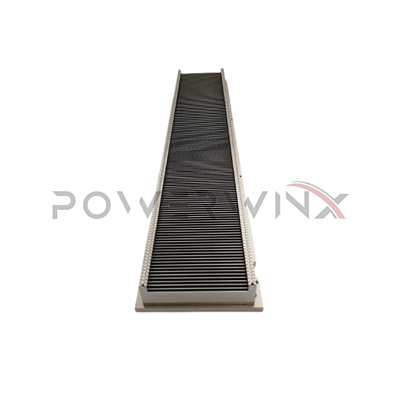
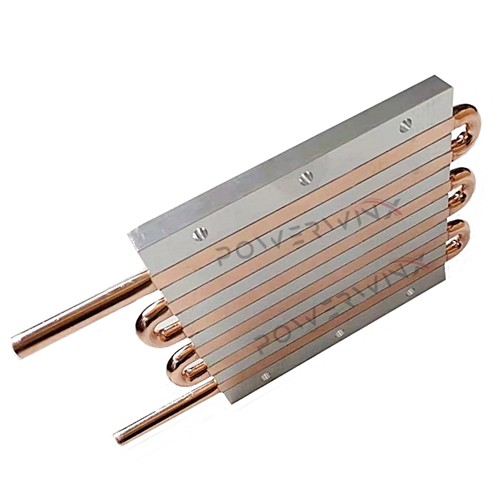
We also have other types of heatsinks in our product line. For instance, our Copper Skived Fin Heat Sink is known for its excellent thermal conductivity, and our Aluminum Stacked Fin Heat Sink offers a great balance between performance and cost.
If you're in the market for a heatsink and want to learn more about how surface roughness can impact your specific application, don't hesitate to reach out. We're here to help you make the right choice. Whether you're an engineer designing a new product or a procurement manager looking for the best heatsink solution, we can provide you with the technical expertise and high - quality products you need.
In conclusion, the surface roughness of a round aluminum heatsink has a significant impact on heat dissipation. While a smooth surface is better for conduction, a rough surface can enhance convection. The choice between the two depends on the specific application, cost considerations, and the overall heat transfer requirements. So, if you're looking for a reliable heatsink supplier, give us a shout, and we'll work together to find the perfect solution for you.
References


- Incropera, F. P., DeWitt, D. P., Bergman, T. L., & Lavine, A. S. (2007). Fundamentals of Heat and Mass Transfer. John Wiley & Sons.
- Holman, J. P. (2010). Heat Transfer. McGraw - Hill.