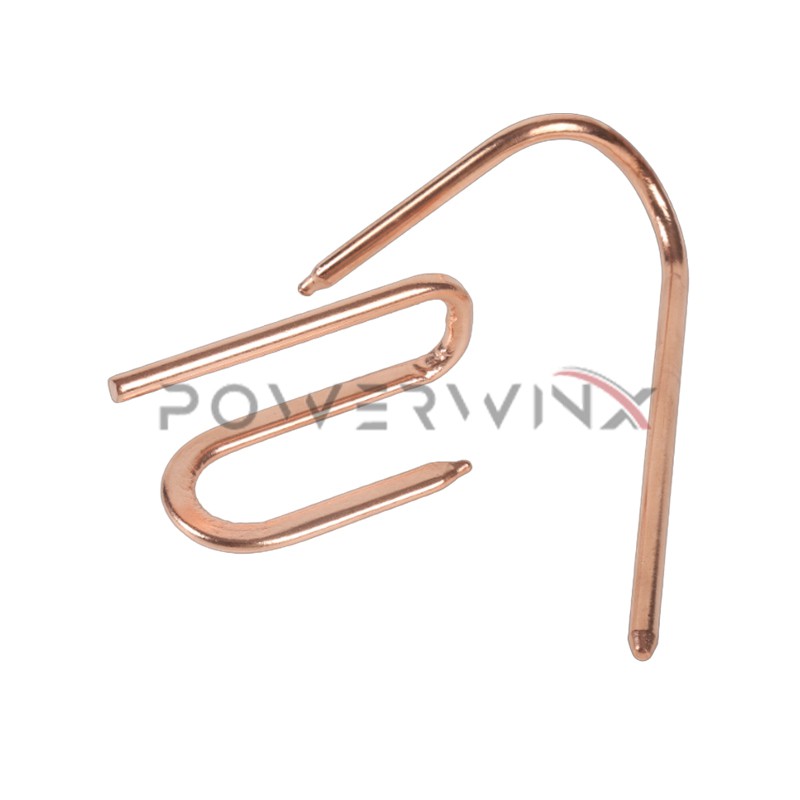
Hey there, folks! I'm a supplier of Stamped Fin Heat Sinks, and today I wanna chat about how to measure the effectiveness of these nifty little devices. Stamped fin heat sinks are super important in a whole bunch of industries, from electronics to automotive. They help keep things cool and running smoothly, but how do we know if they're actually doing their job well? Let's dive in and find out.
Understanding the Basics
First things first, let's talk about what a stamped fin heat sink is. It's a type of heat sink that's made by stamping thin metal fins onto a base plate. This process creates a large surface area, which helps to dissipate heat more effectively. The more surface area there is, the more heat can be transferred away from the hot component.
But measuring the effectiveness of a stamped fin heat sink isn't just about the size of the surface area. There are a whole bunch of other factors that come into play, like the material of the heat sink, the design of the fins, and the airflow around the heat sink. Let's take a closer look at these factors.
Material Matters
The material of the heat sink has a huge impact on its effectiveness. The most common materials used for stamped fin heat sinks are aluminum and copper. Aluminum is lightweight, inexpensive, and has good thermal conductivity. Copper, on the other hand, has even better thermal conductivity, but it's heavier and more expensive.
When measuring the effectiveness of a stamped fin heat sink, it's important to consider the thermal conductivity of the material. Thermal conductivity is a measure of how well a material can transfer heat. The higher the thermal conductivity, the better the heat sink will be at dissipating heat.
Fin Design
The design of the fins also plays a crucial role in the effectiveness of a stamped fin heat sink. There are several different fin designs to choose from, including straight fins, pin fins, and wavy fins. Each design has its own advantages and disadvantages, and the choice of fin design will depend on the specific application.
Straight fins are the simplest and most common fin design. They're easy to manufacture and provide a large surface area for heat transfer. Pin fins, on the other hand, are more complex and provide a higher surface area-to-volume ratio. This makes them more effective at dissipating heat, but they're also more expensive to manufacture.
Wavy fins are a relatively new fin design that combines the advantages of straight fins and pin fins. They provide a large surface area for heat transfer and are more effective at promoting airflow around the heat sink. This makes them a popular choice for high-performance applications.
Airflow
Airflow is another important factor to consider when measuring the effectiveness of a stamped fin heat sink. The job of a heat sink is to transfer heat from the hot component to the surrounding air, so it's important to have good airflow around the heat sink.
There are several different ways to improve airflow around a heat sink, including using a fan, adding ducting, or optimizing the layout of the components. Using a fan is one of the most common ways to improve airflow, as it helps to move the hot air away from the heat sink and replace it with cooler air.
Measuring Effectiveness
Now that we've talked about the factors that affect the effectiveness of a stamped fin heat sink, let's talk about how to measure it. There are several different methods for measuring the effectiveness of a heat sink, including thermal resistance testing, heat transfer coefficient testing, and CFD (Computational Fluid Dynamics) simulation.
Thermal Resistance Testing
Thermal resistance testing is one of the most common methods for measuring the effectiveness of a heat sink. It involves applying a known amount of heat to the heat sink and measuring the temperature difference between the heat sink and the surrounding air. The thermal resistance of the heat sink is then calculated using the following formula:
[R_{th}=\frac{\Delta T}{P}]
Where (R_{th}) is the thermal resistance in degrees Celsius per watt ((^{\circ}C/W)), (\Delta T) is the temperature difference between the heat sink and the surrounding air in degrees Celsius ((^{\circ}C)), and (P) is the power input to the heat sink in watts (W).
The lower the thermal resistance, the more effective the heat sink is at dissipating heat.
Heat Transfer Coefficient Testing
Heat transfer coefficient testing is another method for measuring the effectiveness of a heat sink. It involves measuring the rate of heat transfer from the heat sink to the surrounding air. The heat transfer coefficient is then calculated using the following formula:
[h=\frac{Q}{A\Delta T}]
Where (h) is the heat transfer coefficient in watts per square meter per degree Celsius ((W/m^2\cdot^{\circ}C)), (Q) is the rate of heat transfer in watts (W), (A) is the surface area of the heat sink in square meters ((m^2)), and (\Delta T) is the temperature difference between the heat sink and the surrounding air in degrees Celsius ((^{\circ}C)).
The higher the heat transfer coefficient, the more effective the heat sink is at dissipating heat.
CFD Simulation
CFD simulation is a more advanced method for measuring the effectiveness of a heat sink. It involves using computer software to simulate the airflow and heat transfer around the heat sink. This allows engineers to optimize the design of the heat sink and predict its performance under different conditions.
CFD simulation is a powerful tool, but it's also more expensive and time-consuming than thermal resistance testing and heat transfer coefficient testing.
Comparing with Other Types of Heat Sinks
It's also worth comparing stamped fin heat sinks with other types of heat sinks, like Bonded Fin Heat Sink and Heatsink Extrusion Profiles.
Bonded fin heat sinks are made by bonding individual fins to a base plate. They offer a high degree of customization and can be designed to fit specific applications. However, they're also more expensive to manufacture than stamped fin heat sinks.
Heatsink extrusion profiles are made by extruding a metal alloy through a die to form a continuous shape. They're a cost-effective option for large-scale production and offer good thermal performance. However, they may not be as suitable for applications where space is limited.
Another popular type is the Aluminum Extrusion Heat Sink. These heat sinks are made by extruding aluminum to create a variety of shapes and sizes. They're lightweight, corrosion-resistant, and have good thermal conductivity.
Wrapping Up and Getting in Touch
So, there you have it, folks! Measuring the effectiveness of a stamped fin heat sink involves considering factors like the material, fin design, and airflow, and using methods like thermal resistance testing, heat transfer coefficient testing, or CFD simulation.
If you're in the market for stamped fin heat sinks or have any questions about measuring their effectiveness, I'd love to hear from you. Whether you're working on a small electronics project or a large-scale industrial application, we can provide you with high-quality stamped fin heat sinks that meet your specific needs. Get in touch with us to start a procurement discussion and see how we can help keep your project cool.


References
- Incropera, F. P., & DeWitt, D. P. (2002). Fundamentals of Heat and Mass Transfer. Wiley.
- Çengel, Y. A., & Ghajar, A. J. (2015). Heat and Mass Transfer: Fundamentals and Applications. McGraw-Hill Education.