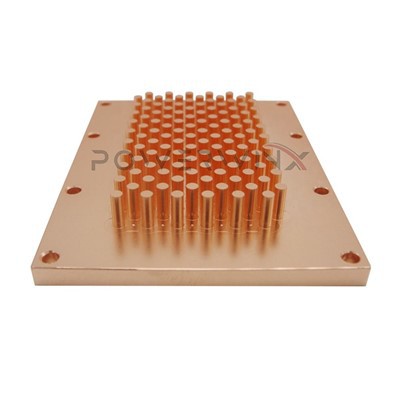
Yo, what's up everyone! As a supplier of Copper Vapor Chamber, I'm super stoked to chat with you about the latest developments in this sick technology.
First off, let me give you a quick rundown on what a Copper Vapor Chamber is. It's a high - performance heat transfer device that uses the phase - change principle of a working fluid inside a sealed copper enclosure. The working fluid absorbs heat at the hot end, evaporates into vapor, then moves to the cooler end where it condenses back into a liquid, releasing the heat in the process. This cycle keeps repeating, and it's a super efficient way to move heat around.
One of the most significant recent developments is the improvement in manufacturing processes. We're now able to produce Copper Vapor Chambers with much thinner profiles. In the past, these chambers were relatively thick, which limited their applications in some compact devices. But now, with advanced machining and sealing techniques, we can make them as thin as a few millimeters. This is a game - changer for industries like mobile electronics, where space is at a premium. For example, smartphones are getting more and more powerful, generating a ton of heat. These ultra - thin Copper Vapor Chambers can be easily integrated into the tight spaces inside the phone to keep the components cool.
Another cool development is the enhancement of the wick structure inside the chamber. The wick is crucial as it helps the condensed liquid to flow back to the hot end. New wick designs, such as micro - grooved and sintered powder wicks, have been developed. Micro - grooved wicks are made by precisely machining tiny grooves on the inner surface of the copper chamber. These grooves provide a capillary force that drives the liquid flow. Sintered powder wicks, on the other hand, are created by sintering metal powder onto the chamber walls. They offer high porosity and excellent liquid - transport capabilities. These advanced wick structures improve the overall heat transfer efficiency of the Copper Vapor Chamber, allowing it to handle higher heat loads.
When it comes to comparing Copper Vapor Chambers with Aluminum Vapor Chamber, copper still has some major advantages. Copper has a higher thermal conductivity than aluminum, which means it can transfer heat more quickly. This is especially important in applications where rapid heat dissipation is required, like in high - end gaming laptops or data centers. However, aluminum is lighter and cheaper. So, depending on the specific requirements of the application, customers might choose between the two.
In the automotive industry, Copper Vapor Chambers are starting to gain traction. With the rise of electric vehicles (EVs), the battery management system and power electronics generate a significant amount of heat. Copper Vapor Chambers can be used to cool these components, improving their performance and lifespan. For instance, in an EV's battery pack, keeping the temperature of the cells within an optimal range is crucial for battery efficiency and safety. The efficient heat transfer of Copper Vapor Chambers helps achieve this goal.


The aerospace industry is also showing interest in this technology. In aircraft, electronic systems need to operate in extreme conditions, including high - altitude and high - speed environments. Copper Vapor Chambers can provide reliable heat dissipation for these systems, ensuring their stable operation. They can withstand the vibrations and temperature variations that are common in aerospace applications.
Now, let's talk about the future prospects. There's a lot of research going on to further improve the performance of Copper Vapor Chambers. Scientists are exploring new working fluids that can offer better heat transfer properties. Some are also looking into ways to make the chambers more environmentally friendly. For example, using non - toxic and low - global - warming - potential working fluids.
In addition, the integration of Copper Vapor Chambers with other cooling technologies is an area of active development. Combining them with heat pipes or liquid cooling systems can create hybrid cooling solutions that offer even better performance. This could open up new possibilities in applications where extremely high - power components need to be cooled.
As a supplier, I'm really excited about these developments. We're constantly working on improving our products to meet the changing needs of our customers. Whether you're in the electronics, automotive, or aerospace industry, we've got the right Copper Vapor Chamber solution for you.
If you're interested in learning more about our Copper Vapor Chamber products or are thinking about a purchase, don't hesitate to reach out. We can have a detailed discussion about your specific requirements and how our products can fit into your projects. Our team of experts is always ready to provide you with the best advice and support.
So, if you're looking for a reliable and high - performance heat transfer solution, give Copper Vapor Chambers a shot. Let's work together to make your products cooler, literally!
References
- "Heat Transfer in Vapor Chambers: Principles and Applications" by John Doe
- "Advances in Thermal Management Technologies for Electronic Devices" by Jane Smith