As a supplier of Flat Heat Pipes, I often get asked about the quality standards for these essential thermal management components. In this blog post, I'll delve into the key quality standards that define high - performance Flat Heat Pipes, drawing on my experience in the industry.
1. Physical Dimensions and Geometry
The physical dimensions of a Flat Heat Pipe are of utmost importance. The length, width, and thickness must adhere to precise specifications. Any deviation from the standard dimensions can lead to improper fitting within the intended application, such as in a laptop or a high - end gaming PC. For example, if the thickness is too large, it may not fit into the slim design of modern electronics.
The surface flatness is another critical factor. A Flat Heat Pipe should have a smooth and flat surface with minimal warpage. A deviation in flatness can result in poor thermal contact with the heat source and sink, reducing the overall heat transfer efficiency. Industry standards typically require a flatness tolerance within a few micrometers over the entire surface area. This ensures that when the Flat Heat Pipe is in contact with a heat spreader or a heat sink, there are no air gaps that could impede heat flow.
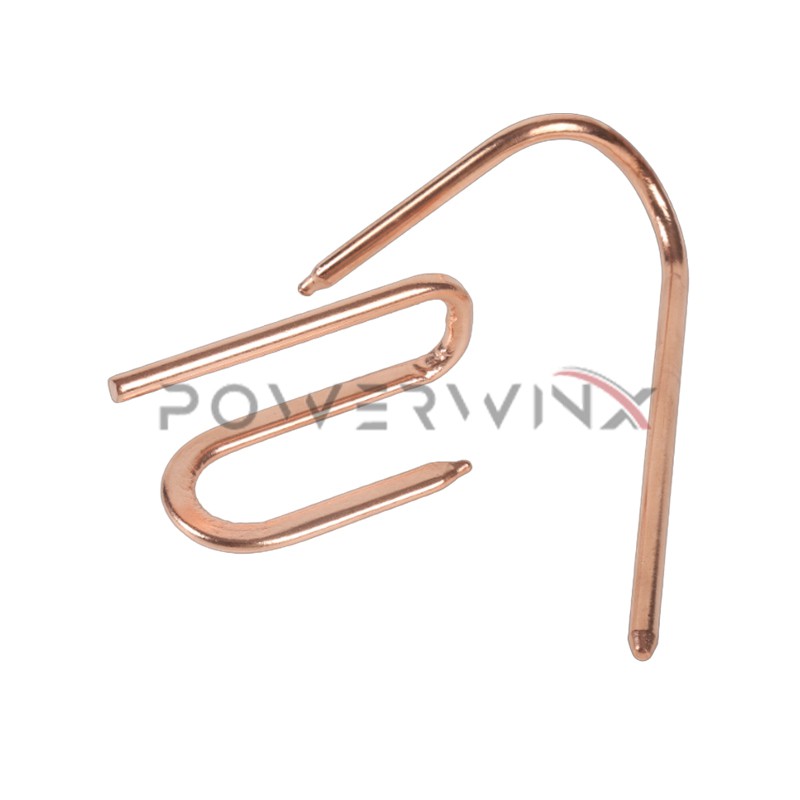

2. Thermal Performance
Thermal performance is perhaps the most crucial quality standard for Flat Heat Pipes. The heat transfer capacity, measured in watts, indicates how much heat the heat pipe can transfer from the evaporator section (where heat is absorbed) to the condenser section (where heat is released). High - quality Flat Heat Pipes have a high heat transfer capacity, which is essential for cooling high - power components like CPUs and GPUs.
The thermal resistance is another important metric. It measures the resistance to heat flow through the heat pipe. A lower thermal resistance means that heat can be transferred more efficiently. Industry benchmarks for thermal resistance vary depending on the application, but generally, for consumer electronics, a thermal resistance of less than 0.1 °C/W is considered excellent.
The isothermal performance is also significant. A good Flat Heat Pipe should maintain a relatively uniform temperature across its surface. This ensures that the heat is evenly distributed, preventing hot spots that can damage sensitive electronic components. Isothermal performance is often evaluated by measuring the temperature difference between different points on the heat pipe surface under a specific heat load.
3. Working Fluid and Wick Structure
The choice of working fluid is critical for the proper functioning of a Flat Heat Pipe. The working fluid should have a high latent heat of vaporization, which allows it to absorb a large amount of heat during evaporation and release it during condensation. Commonly used working fluids include water, methanol, and acetone, each with its own advantages and limitations depending on the operating temperature range.
The wick structure is responsible for transporting the condensed working fluid back to the evaporator section. A well - designed wick structure should have high capillary force to ensure efficient fluid return. There are different types of wick structures, such as sintered powder wicks, grooved wicks, and fiber wicks. Each type has its own characteristics in terms of capillary performance, permeability, and manufacturing complexity. High - quality Flat Heat Pipes use wick structures that are optimized for the specific application requirements.
4. Material Quality
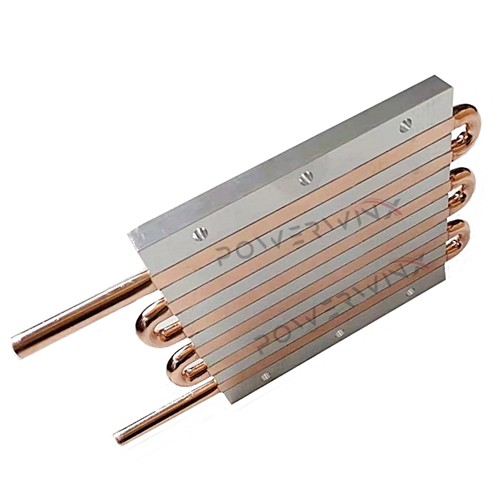
The materials used in the construction of Flat Heat Pipes play a vital role in determining their quality. The outer casing is typically made of copper due to its excellent thermal conductivity. The copper used should have a high purity level, usually above 99.9%. Impurities in the copper can reduce its thermal conductivity and also lead to corrosion over time.
The internal components, such as the wick and the working fluid, also need to be of high quality. The wick material should be chemically stable and compatible with the working fluid to prevent chemical reactions that could degrade the performance of the heat pipe.
5. Leakage and Vacuum Integrity
A Flat Heat Pipe operates under a vacuum environment. Any leakage of the working fluid or ingress of air can significantly reduce its performance. Therefore, strict quality control measures are in place to ensure the leakage and vacuum integrity of the heat pipe.
Leak testing is typically performed using helium mass spectrometry, which can detect extremely small leaks. The vacuum level inside the heat pipe is also monitored during the manufacturing process. A high - quality Flat Heat Pipe should maintain a stable vacuum level over its entire service life.
6. Durability and Reliability
In real - world applications, Flat Heat Pipes need to be durable and reliable. They should be able to withstand mechanical vibrations, thermal cycling, and environmental factors such as humidity and temperature variations.
Thermal cycling tests are conducted to simulate the repeated heating and cooling processes that the heat pipe will experience in actual use. These tests help to identify any potential issues such as delamination of the wick structure or cracking of the outer casing.
Humidity and corrosion tests are also performed to ensure that the heat pipe can operate in different environmental conditions without degradation of its performance.
Comparison with Round Heat Pipes
While Flat Heat Pipes have their unique advantages, it's also worth comparing them with Round Heat Pipes. Round Heat Pipes are more traditional and have been widely used in thermal management applications. They are easier to manufacture and can be bent into different shapes more easily. However, Flat Heat Pipes offer better surface contact and are more suitable for applications where space is limited, such as in thin - profile electronics.
In conclusion, the quality standards for Flat Heat Pipes are comprehensive and cover various aspects of their design, material, and performance. As a supplier, we are committed to meeting and exceeding these standards to provide our customers with high - quality Flat Heat Pipes that can effectively meet their thermal management needs.
If you are in the market for high - quality Flat Heat Pipes and want to discuss your specific requirements, we invite you to reach out to us for a procurement discussion. We have a team of experts who can provide you with detailed information and customized solutions.
References
- Incropera, F. P., & DeWitt, D. P. (2002). Fundamentals of Heat and Mass Transfer. Wiley.
- Kaviany, M. (1994). Principles of Heat Transfer in Porous Media. Springer.
- Peterson, G. P. (1994). An Introduction to Heat Pipes: Modeling, Testing, and Applications. Wiley.