Ductility is a critical property when it comes to the materials used in cold forged heat sinks. As a leading supplier of cold forged heat sinks, understanding the ductility of these materials is essential for ensuring high - quality products and meeting the needs of our customers.
The Concept of Ductility
Ductility is defined as the ability of a material to deform under tensile stress without fracturing. In simpler terms, it is the property that allows a material to be stretched into a wire or hammered into a thin sheet. For cold forged heat sink materials, ductility is crucial as the cold forging process involves shaping the material at room temperature through compressive forces. A material with high ductility can withstand these forces and be shaped into complex geometries without cracking or breaking.
Common Cold Forged Heat Sink Materials and Their Ductility
Aluminum Alloys
Aluminum is one of the most widely used materials for cold forged heat sinks. This is due in part to its excellent thermal conductivity as well as its good ductility. Aluminum alloys, such as 6061 and 6063, are particularly popular.


6061 aluminum alloy contains magnesium and silicon as its major alloying elements. It has moderate to high strength and good ductility. During the cold forging process, the 6061 alloy can be easily formed into various shapes, such as fins and base plates of heat sinks. The ductility of 6061 allows for a high degree of precision in the forging process, enabling the production of heat sinks with thin - walled structures and complex fin designs.
6063 aluminum alloy, on the other hand, is known for its superior extrusion ability and relatively high ductility. It is often used for heat sinks that require smooth surfaces and intricate profiles. The ductility of 6063 makes it easier to achieve tight tolerances during cold forging, which is crucial for ensuring a proper fit and maximum heat transfer efficiency in the final heat sink product.
Copper Alloys
Copper is another material with high thermal conductivity, making it a good candidate for heat sinks. Copper alloys, like C11000, are commonly used in cold forging applications. C11000, also known as electrolytic tough - pitch (ETP) copper, has very high electrical and thermal conductivity. It also exhibits excellent ductility, which is beneficial for the cold forging process.
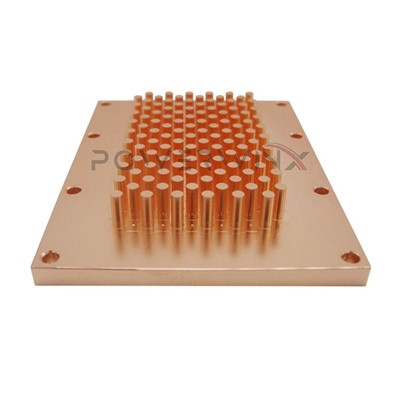
The high ductility of copper alloys allows for the production of heat sinks with thin and long fins. These fins can increase the surface area of the heat sink, which in turn enhances the heat dissipation capacity. However, copper is more expensive than aluminum, and its higher density may also be a drawback in some applications where weight is a concern.
Importance of Ductility in Cold Forging Process
Complex Shape Forming
Cold forging is used to create heat sinks with complex and precise shapes. The ductility of the material enables it to flow under pressure and take on the shape of the forging die. For example, in the production of heat sinks with micro - fins or irregularly shaped bases, a ductile material can be easily molded to achieve the desired form. This allows us to produce CNC Machined Heat Sink that can meet the specific requirements of different electronic devices.
Reducing Defects
When a material has high ductility, it is less likely to crack or develop other defects during the cold forging process. Cracks in a heat sink can significantly reduce its structural integrity and thermal performance. By using materials with good ductility, we can minimize the occurrence of these defects and ensure the reliability of our cold forged heat sinks.
Enhancing Productivity
A ductile material can be forged at a faster rate without sacrificing quality. Since it can easily deform under pressure, the forging process can be completed more efficiently. This is beneficial for large - scale production of cold forged heat sinks, as it reduces production time and cost.
Ductility and Heat Sink Performance
Thermal Conductivity Retention
The ductility of a heat sink material doesn't directly affect its thermal conductivity. However, the ability to form complex shapes due to high ductility can enhance the overall heat dissipation performance of the heat sink. For instance, the Round Aluminum Heatsink can be cold - forged using a ductile aluminum alloy to create a shape that maximizes the surface area for heat transfer, thus improving the heat dissipation efficiency.
Structural Integrity
As mentioned earlier, a ductile material is less likely to develop cracks during the cold forging process. This ensures the long - term structural integrity of the heat sink. A heat sink with good structural integrity can maintain its shape and performance even under harsh operating conditions, such as high temperatures and vibrations.
Testing the Ductility of Cold Forged Heat Sink Materials
To ensure the quality of our cold forged heat sinks, we conduct regular testing on the ductility of the materials we use. Tensile testing is a common method for measuring ductility. In this test, a sample of the material is clamped at both ends and gradually pulled until it breaks. The amount of elongation and reduction in cross - sectional area before fracture are measured to determine the ductility of the material.
We also use non - destructive testing methods, such as ultrasonic testing and X - ray inspection, to detect any internal defects in the cold forged heat sinks. These defects can potentially affect the ductility and performance of the heat sink, and early detection allows us to take corrective actions.
Conclusion
In conclusion, the ductility of cold forged heat sink materials plays a vital role in the production and performance of heat sinks. As a cold forged heat sink supplier, we understand the importance of using materials with high ductility to ensure the quality and reliability of our products. Whether it's the ability to form complex shapes, reduce defects, or enhance productivity, ductility is a key factor in the cold forging process.
If you are in need of high - quality cold forged heat sinks, we are here to provide you with the best solutions. Our team of experts can help you choose the right material based on your specific requirements. We offer a wide range of Aluminum Extrusion Heat Sink and other types of heat sinks to meet your needs. Contact us today to start a procurement negotiation and take your thermal management solutions to the next level.
References
- Callister, W. D., & Rethwisch, D. G. (2010). Materials Science and Engineering: An Introduction. Wiley.
- ASM Handbook Committee. (2000). ASM Handbook, Volume 2: Properties and Selection: Nonferrous Alloys and Special - Purpose Materials. ASM International.
- Metals Handbook Desk Edition. (1998). ASM International.