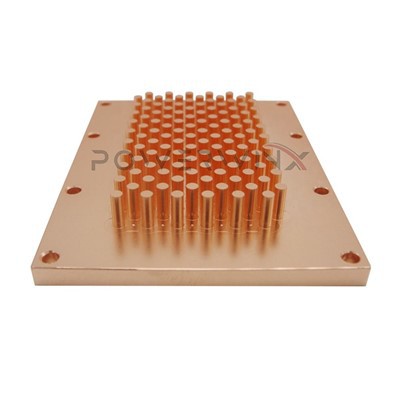
Hey there! As a supplier of Zipper Fin Heat Sinks, I often get asked about the thermal resistance of these nifty cooling devices. So, I thought I'd take a deep dive into what thermal resistance is, how it applies to Zipper Fin Heat Sinks, and why it matters for your cooling needs.
What the Heck is Thermal Resistance?
Let's start with the basics. Thermal resistance is a measure of how much a material or a device resists the flow of heat. Think of it like traffic on a highway. If the highway is wide and clear, cars (or in this case, heat) can move through easily. But if there are lots of bottlenecks, toll booths, or accidents, the traffic slows down. That's what thermal resistance does to heat flow.
In technical terms, thermal resistance (R) is defined as the temperature difference (ΔT) between two points divided by the heat transfer rate (Q). The formula looks like this: R = ΔT / Q. The unit of thermal resistance is degrees Celsius per watt (°C/W). A lower thermal resistance means that heat can flow more easily through the material or device.
How Does Thermal Resistance Work in Zipper Fin Heat Sinks?
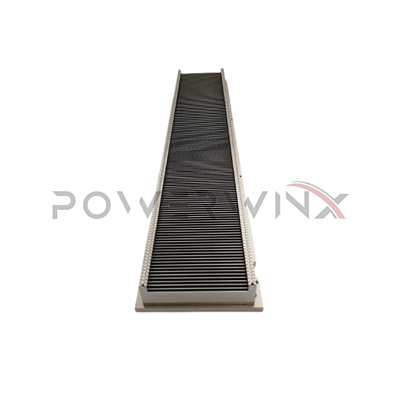
Zipper Fin Heat Sinks are designed to efficiently transfer heat from a heat source, like a microprocessor or a power transistor, to the surrounding air. They do this by increasing the surface area available for heat transfer. The fins on the heat sink act like little highways for heat, allowing it to spread out and dissipate into the air more quickly.
The thermal resistance of a Zipper Fin Heat Sink depends on several factors, including the material of the heat sink, the design of the fins, the size of the heat sink, and the airflow around it. Let's take a closer look at each of these factors.
Material
The material of the heat sink plays a crucial role in determining its thermal resistance. Most Zipper Fin Heat Sinks are made of aluminum because it's lightweight, inexpensive, and has good thermal conductivity. Thermal conductivity is the ability of a material to conduct heat. The higher the thermal conductivity, the lower the thermal resistance. Aluminum has a thermal conductivity of about 200 W/m·K, which means it can transfer heat quite efficiently.
Fin Design
The design of the fins also affects the thermal resistance of the heat sink. Zipper Fin Heat Sinks have a unique fin design that allows for better airflow and increased surface area. The fins are arranged in a zigzag pattern, which creates a turbulent airflow that helps to break up the boundary layer of air around the fins. The boundary layer is a thin layer of air that forms on the surface of the fins and acts as an insulator, reducing the efficiency of heat transfer. By breaking up the boundary layer, the turbulent airflow allows for more efficient heat transfer and lower thermal resistance.
Size
The size of the heat sink is another important factor. Generally, larger heat sinks have lower thermal resistance because they have more surface area available for heat transfer. However, the size of the heat sink also needs to be balanced with the available space and the airflow requirements. A heat sink that is too large may not fit in the available space, and a heat sink that is too small may not be able to dissipate enough heat.
Airflow
The airflow around the heat sink is crucial for efficient heat transfer. Without proper airflow, the heat will build up around the heat sink, increasing its temperature and thermal resistance. There are two main types of airflow: natural convection and forced convection.
Natural convection occurs when the heat from the heat sink causes the air around it to heat up and rise. As the hot air rises, cooler air moves in to take its place, creating a natural airflow. Natural convection is a simple and cost-effective way to cool a heat sink, but it may not be sufficient for high-power applications.
Forced convection, on the other hand, uses a fan or a blower to force air over the heat sink. This creates a more consistent and powerful airflow, which can significantly reduce the thermal resistance of the heat sink. Forced convection is commonly used in high-power applications, such as computers, servers, and industrial equipment.
Why Does Thermal Resistance Matter?
The thermal resistance of a Zipper Fin Heat Sink is important because it directly affects the temperature of the heat source. If the thermal resistance is too high, the heat source will not be able to dissipate heat efficiently, causing its temperature to rise. High temperatures can damage electronic components, reduce their lifespan, and even cause them to fail.
By using a Zipper Fin Heat Sink with a low thermal resistance, you can ensure that your electronic components stay cool and operate at their optimal performance. This can help to improve the reliability and longevity of your equipment, reduce maintenance costs, and prevent costly downtime.
Comparing Zipper Fin Heat Sinks with Other Types of Heat Sinks
Zipper Fin Heat Sinks are just one type of heat sink available on the market. Other common types of heat sinks include Stacked Fin Heat Sink, Die Cast Aluminum Heat Sink, and Aluminum Stacked Fin Heat Sink. Each type of heat sink has its own advantages and disadvantages, and the choice of heat sink depends on the specific application and requirements.
Stacked Fin Heat Sinks are made by stacking thin metal fins on top of each other. They are relatively easy to manufacture and can provide a large surface area for heat transfer. However, they may have a higher thermal resistance compared to Zipper Fin Heat Sinks because the fins are not as well-connected, which can impede the flow of heat.
Die Cast Aluminum Heat Sinks are made by injecting molten aluminum into a mold. They are strong and durable, and can be made in complex shapes. However, they may have a lower surface area for heat transfer compared to Zipper Fin Heat Sinks, which can result in a higher thermal resistance.
Aluminum Stacked Fin Heat Sinks are similar to Stacked Fin Heat Sinks, but they are made of aluminum. They offer a good balance between cost, performance, and ease of manufacture. However, like Stacked Fin Heat Sinks, they may have a higher thermal resistance compared to Zipper Fin Heat Sinks.
How to Choose the Right Zipper Fin Heat Sink Based on Thermal Resistance
When choosing a Zipper Fin Heat Sink, it's important to consider the thermal resistance requirements of your application. Here are some steps to help you choose the right heat sink:


- Determine the heat dissipation requirements: Calculate the amount of heat that needs to be dissipated from your heat source. This can usually be found in the datasheet of the electronic component.
- Determine the maximum allowable temperature: Determine the maximum temperature that your electronic component can operate at without being damaged. This is also usually specified in the datasheet.
- Calculate the required thermal resistance: Use the formula R = ΔT / Q to calculate the required thermal resistance of the heat sink. ΔT is the temperature difference between the heat source and the surrounding air, and Q is the heat dissipation rate.
- Select a heat sink with a lower thermal resistance: Look for a Zipper Fin Heat Sink that has a thermal resistance lower than the required thermal resistance. This will ensure that the heat sink can effectively dissipate the heat and keep the temperature of the heat source within the acceptable range.
Conclusion
In conclusion, the thermal resistance of Zipper Fin Heat Sinks is a crucial factor in determining their effectiveness in cooling electronic components. By understanding how thermal resistance works and what factors affect it, you can choose the right Zipper Fin Heat Sink for your application and ensure that your electronic components stay cool and operate at their best.
If you're in the market for high-quality Zipper Fin Heat Sinks, look no further. As a trusted supplier, we offer a wide range of Zipper Fin Heat Sinks with low thermal resistance and excellent cooling performance. Whether you're working on a small DIY project or a large industrial application, we have the right heat sink for you. Contact us today to discuss your specific requirements and let's start a great partnership!
References
- Incropera, F. P., DeWitt, D. P., Bergman, T. L., & Lavine, A. S. (2017). Fundamentals of Heat and Mass Transfer. Wiley.
- Kays, W. M., Crawford, M. E., & Weigand, B. (2005). Convective Heat and Mass Transfer. McGraw-Hill.