Can a pin fin heat sink be used in battery cooling? This is a question that has gained significant attention in recent years, especially as the demand for high - performance batteries in electric vehicles, portable electronics, and renewable energy storage systems continues to grow. As a pin fin heat sink supplier, I am well - placed to explore this topic and share some insights.
The Need for Battery Cooling
Batteries generate heat during charging and discharging processes. Excessive heat can lead to a series of problems, such as reduced battery life, decreased performance, and even safety hazards like thermal runaway. For instance, in electric vehicles, battery temperature management is crucial to ensure the vehicle's range and reliability. In portable electronics, overheating can cause the device to throttle its performance or, in extreme cases, pose a risk of fire. Therefore, effective cooling solutions are essential to maintain the optimal operating temperature of batteries.
Pin Fin Heat Sinks: An Overview
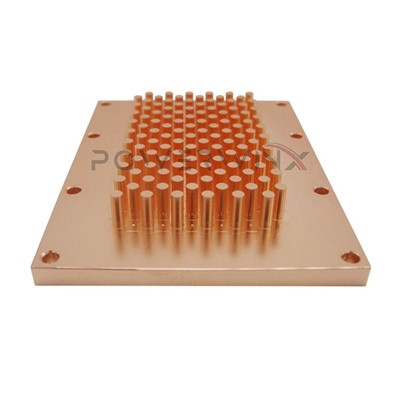
Pin fin heat sinks are a type of passive cooling device. They consist of an array of pins attached to a base plate. The pins increase the surface area available for heat transfer, allowing heat to dissipate more efficiently from the source (in this case, the battery) to the surrounding environment. The design of pin fin heat sinks can be highly customized, with variations in pin shape (e.g., cylindrical, square), size, and density.
One of the key advantages of pin fin heat sinks is their high surface - area - to - volume ratio. This characteristic enables them to transfer heat effectively, making them a popular choice in many thermal management applications. Additionally, pin fin heat sinks can be made from various materials, such as aluminum and copper, each with its own thermal conductivity properties. Copper, for example, has excellent thermal conductivity, which makes it suitable for applications where high - heat dissipation is required. You can learn more about our CNC Machined Copper Heat Sink, which offers exceptional performance in heat transfer.
Feasibility of Pin Fin Heat Sinks in Battery Cooling
When considering the use of pin fin heat sinks in battery cooling, several factors need to be evaluated.
Heat Dissipation Efficiency
The heat generated by batteries can be substantial, especially in high - power applications. Pin fin heat sinks can effectively enhance the heat transfer rate due to their large surface area. For example, in a lithium - ion battery pack, the pin fins can absorb the heat from the battery cells and transfer it to the surrounding air. The pins disrupt the boundary layer of air around the heat sink, promoting better convective heat transfer. This results in a more efficient cooling process, which helps maintain the battery temperature within the optimal range.
Space and Compatibility
Pin fin heat sinks can be designed to fit into different battery enclosures. Their compact design allows for easy integration with battery packs, whether in small portable devices or large - scale battery storage systems. Moreover, they can be customized to meet specific shape and size requirements, ensuring compatibility with various battery designs.
Cost - effectiveness
Compared to some active cooling methods, such as liquid cooling systems, pin fin heat sinks are generally more cost - effective. They do not require additional components like pumps, coolant, or complex plumbing, which reduces both the initial investment and the long - term maintenance costs. This makes them an attractive option for battery cooling, especially in cost - sensitive applications.
Comparison with Other Heat Sinks
While pin fin heat sinks have many advantages, it is also important to compare them with other types of heat sinks commonly used in battery cooling.
Folded Fin Heat Sinks
Folded fin heat sinks are another popular choice for thermal management. They are made by folding a thin strip of metal to form a series of fins. Folded fin heat sinks offer a high surface - area - to - volume ratio and are relatively easy to manufacture. However, they may have limitations in terms of airflow. In some cases, the closely spaced fins can create a high - resistance path for air, which may reduce the overall cooling efficiency. Pin fin heat sinks, on the other hand, generally provide better airflow characteristics due to the open structure of the pins.
Copper Stamped Fin Heat Sinks
Copper stamped fin heat sinks are fabricated by stamping copper sheets to create fins. These heat sinks are known for their good thermal conductivity and relatively low cost. However, the stamping process may limit the fin height and density, which can affect the overall heat transfer performance. Pin fin heat sinks can be designed with more flexibility in terms of pin height and density, allowing for better customization to meet specific thermal requirements.
Challenges and Considerations
Although pin fin heat sinks show great potential for battery cooling, there are still some challenges that need to be addressed.


Airflow Management
The effectiveness of a pin fin heat sink relies heavily on proper airflow. In some battery applications, the available airflow may be limited, such as in sealed battery enclosures. In such cases, additional measures may be required, such as using fans to enhance the airflow over the heat sink.
Dust and Debris Accumulation
Pin fin heat sinks can be prone to dust and debris accumulation, especially in dirty or dusty environments. This can reduce the heat transfer efficiency over time. Regular maintenance, such as cleaning the heat sink, may be necessary to ensure optimal performance.
Conclusion
In conclusion, pin fin heat sinks can indeed be used in battery cooling. Their high heat dissipation efficiency, space compatibility, and cost - effectiveness make them a viable option for a wide range of battery applications. While they face some challenges, such as airflow management and dust accumulation, these can be mitigated through proper design and maintenance.
If you are looking for a reliable pin fin heat sink solution for your battery cooling needs, we are here to help. Our team of experts can provide customized solutions based on your specific requirements. We invite you to contact us for further discussion and to explore how our pin fin heat sinks can enhance the performance and longevity of your batteries.
References
- Incropera, F. P., & DeWitt, D. P. (2002). Fundamentals of Heat and Mass Transfer. John Wiley & Sons.
- Datta, A. K., & Haji - Salim, I. (2005). Thermal Engineering. Taylor & Francis.