As a supplier of CNC machined heat sinks, I often get asked about the maximum heat dissipation capacity of these essential components. Heat sinks play a crucial role in various industries, from electronics to automotive, by transferring heat away from critical components and ensuring their optimal performance. In this blog post, I'll delve into the factors that determine the maximum heat dissipation capacity of CNC machined heat sinks and explore how our products can meet your specific needs.
Understanding Heat Dissipation
Before we discuss the maximum heat dissipation capacity, it's important to understand the basic principles of heat transfer. Heat dissipation occurs through three main mechanisms: conduction, convection, and radiation.
- Conduction: This is the transfer of heat through a solid material. In a heat sink, conduction occurs when heat is transferred from the heat source (such as a microprocessor) to the heat sink itself. The efficiency of conduction depends on the thermal conductivity of the material used in the heat sink. Materials with high thermal conductivity, such as aluminum and copper, are commonly used in heat sink manufacturing.
- Convection: Convection is the transfer of heat through the movement of a fluid (either a gas or a liquid). In the case of heat sinks, convection occurs when air flows over the fins of the heat sink, carrying away the heat. There are two types of convection: natural convection and forced convection. Natural convection occurs when the air moves due to differences in temperature, while forced convection is achieved by using a fan or other mechanical means to move the air.
- Radiation: Radiation is the transfer of heat through electromagnetic waves. While radiation plays a relatively minor role in the heat dissipation of most heat sinks, it can still contribute to the overall heat transfer, especially at higher temperatures.
Factors Affecting Heat Dissipation Capacity
The maximum heat dissipation capacity of a CNC machined heat sink is determined by several factors, including:
- Material: As mentioned earlier, the thermal conductivity of the material used in the heat sink is a critical factor in determining its heat dissipation capacity. Aluminum is a popular choice for heat sinks due to its high thermal conductivity, lightweight, and relatively low cost. Copper, on the other hand, has even higher thermal conductivity but is more expensive and heavier.
- Surface Area: The surface area of the heat sink is directly proportional to its heat dissipation capacity. By increasing the surface area, more heat can be transferred from the heat sink to the surrounding air. This is why heat sinks often have fins or other structures that increase the surface area available for heat transfer.
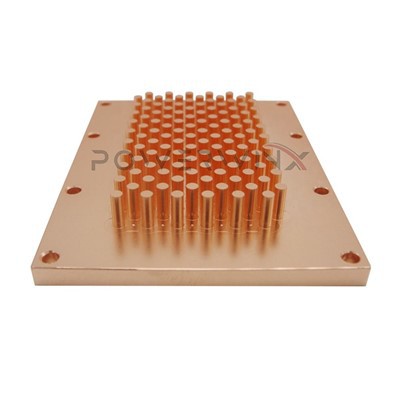
- Fin Design: The design of the fins on the heat sink can also have a significant impact on its heat dissipation capacity. Fins can be designed in various shapes and sizes, such as straight fins, pin fins, or zigzag fins. The choice of fin design depends on the specific application and the requirements for heat dissipation.
- Airflow: The amount of airflow over the heat sink is another important factor in determining its heat dissipation capacity. Forced convection, achieved by using a fan or other mechanical means, can significantly increase the airflow and improve the heat transfer efficiency. The direction and speed of the airflow also play a role in the effectiveness of the heat sink.
- Temperature Difference: The temperature difference between the heat source and the surrounding air is a key factor in determining the rate of heat transfer. A larger temperature difference will result in a higher rate of heat transfer, which means that the heat sink can dissipate more heat.
Types of CNC Machined Heat Sinks
At our company, we offer a wide range of CNC machined heat sinks to meet the diverse needs of our customers. Some of the most common types of heat sinks we provide include:
- Aluminum Zipper Fin Heat Sinks: These heat sinks feature a unique zipper fin design that provides a high surface area for efficient heat transfer. The zipper fin design allows for easy customization and can be tailored to specific applications.
- Stamped Fin Heat Sink: Stamped fin heat sinks are made by stamping thin metal sheets into fin shapes. They are relatively inexpensive and can be produced in large quantities. Stamped fin heat sinks are commonly used in applications where cost is a major consideration.
- Extruded Aluminum Heat Sink: Extruded aluminum heat sinks are made by extruding aluminum through a die to create a specific shape. They are known for their high thermal conductivity and can be easily customized to meet the requirements of different applications.
Calculating the Maximum Heat Dissipation Capacity
Calculating the maximum heat dissipation capacity of a CNC machined heat sink can be a complex process that requires a detailed understanding of the heat transfer principles and the specific characteristics of the heat sink. In general, the heat dissipation capacity can be estimated using the following formula:
Q = h * A * ΔT
Where:
- Q is the heat dissipation capacity (in watts)
- h is the heat transfer coefficient (in watts per square meter per degree Celsius)
- A is the surface area of the heat sink (in square meters)
- ΔT is the temperature difference between the heat source and the surrounding air (in degrees Celsius)
The heat transfer coefficient depends on several factors, including the type of convection (natural or forced), the airflow rate, and the surface properties of the heat sink. It can be determined experimentally or estimated using empirical correlations.
Meeting Your Heat Dissipation Requirements
As a leading supplier of CNC machined heat sinks, we understand the importance of providing high-quality products that meet the specific requirements of our customers. Our team of experienced engineers and technicians can work with you to design and manufacture heat sinks that are optimized for your application.
We use state-of-the-art CNC machining technology to ensure the precision and accuracy of our heat sinks. Our manufacturing process allows us to produce heat sinks with complex shapes and designs, which can maximize the surface area and improve the heat dissipation efficiency.
In addition to our standard product offerings, we also offer custom heat sink solutions. Whether you need a heat sink with a specific size, shape, or fin design, we can work with you to develop a solution that meets your exact requirements.
Conclusion
The maximum heat dissipation capacity of CNC machined heat sinks is determined by several factors, including the material, surface area, fin design, airflow, and temperature difference. By understanding these factors and working with a reliable supplier, you can ensure that you choose the right heat sink for your application.
At our company, we are committed to providing high-quality CNC machined heat sinks that meet the needs of our customers. Our wide range of products, combined with our custom design capabilities, allows us to offer solutions for a variety of industries and applications.


If you are interested in learning more about our CNC machined heat sinks or would like to discuss your specific requirements, please contact us. Our team of experts will be happy to assist you and provide you with a quote.
References
- Incropera, F. P., & DeWitt, D. P. (2002). Fundamentals of Heat and Mass Transfer. John Wiley & Sons.
- Holman, J. P. (2002). Heat Transfer. McGraw-Hill.
- Kraus, A. D., & Bar-Cohen, A. (1995). Design and Analysis of Heat Sinks. John Wiley & Sons.