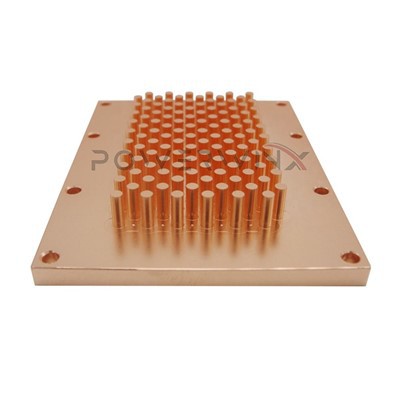
The boiling point of the working fluid in a Copper Vapor Chamber is a critical factor that significantly influences its thermal performance. As a supplier of Copper Vapor Chambers, I'm often asked about this parameter, and in this blog post, I'll delve into the details of what determines the boiling point, its importance, and how it impacts the overall functionality of these advanced thermal management solutions.
Understanding Copper Vapor Chambers
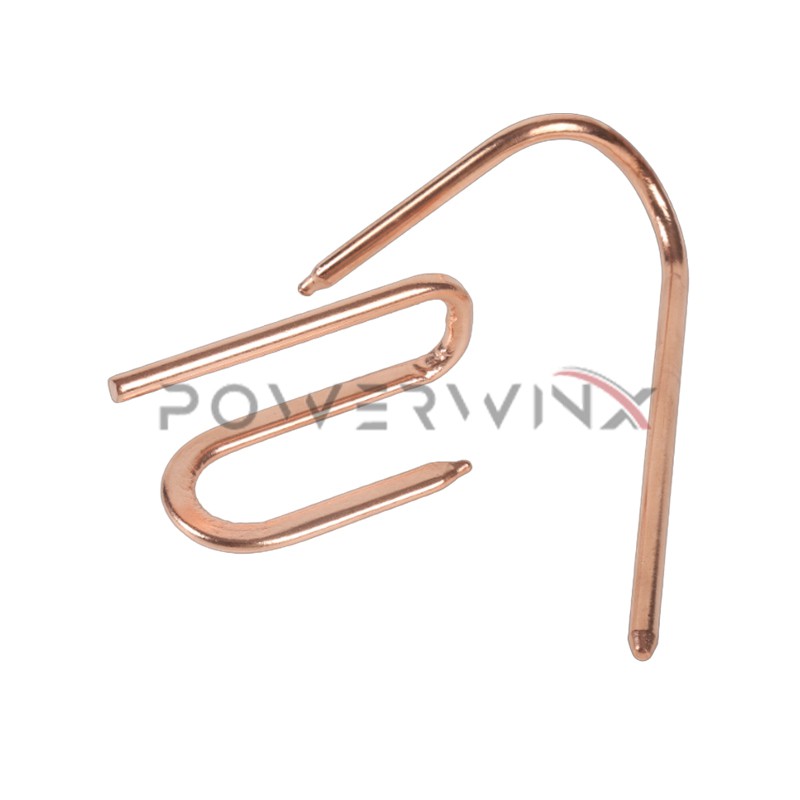
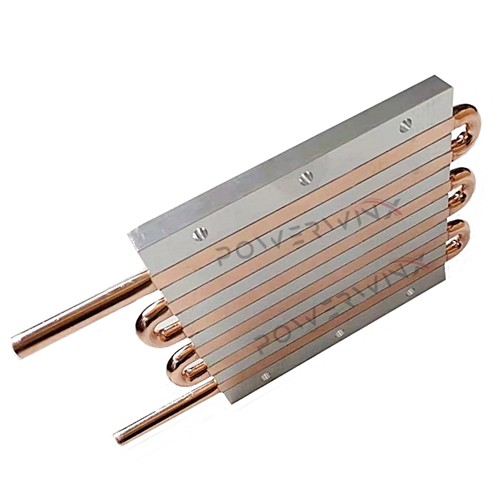
Before we discuss the boiling point of the working fluid, let's briefly understand what a Copper Vapor Chamber is. A Copper Vapor Chamber is a two - phase heat transfer device that uses the evaporation and condensation of a working fluid to transfer heat efficiently. It consists of a sealed copper enclosure, which is usually evacuated and then filled with a small amount of working fluid. The copper enclosure provides a highly conductive path for heat, while the working fluid plays a crucial role in the heat transfer process.
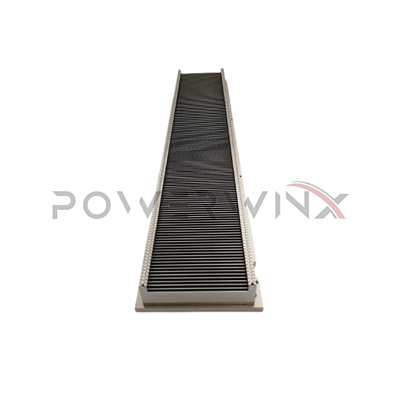
Copper Vapor Chambers are widely used in various applications, including high - performance computing, electronics cooling, and LED lighting, where efficient heat dissipation is essential to maintain the reliability and performance of the devices. Compared to traditional heat sinks or heat pipes, Copper Vapor Chambers offer several advantages, such as higher heat transfer rates, lower thermal resistance, and more uniform temperature distribution. You can learn more about our Copper Vapor Chamber on our website.
The Role of the Working Fluid
The working fluid in a Copper Vapor Chamber is the key component that enables the heat transfer process. When heat is applied to one side of the vapor chamber (the evaporator section), the working fluid absorbs the heat and evaporates. The vapor then travels to the cooler side of the chamber (the condenser section), where it releases the heat and condenses back into a liquid. The condensed liquid then returns to the evaporator section through capillary action, completing the heat transfer cycle.
The choice of working fluid depends on several factors, including its boiling point, latent heat of vaporization, chemical stability, and compatibility with the copper enclosure. Commonly used working fluids in Copper Vapor Chambers include water, methanol, and acetone. Each of these fluids has its own unique properties, which make them suitable for different applications.
Boiling Point of the Working Fluid
The boiling point of the working fluid is a crucial parameter that determines the operating temperature range of the Copper Vapor Chamber. It is defined as the temperature at which the vapor pressure of the liquid equals the external pressure. In the case of a Copper Vapor Chamber, the external pressure is usually close to the vapor pressure inside the sealed chamber, which is typically very low (near vacuum).
For water, which is one of the most commonly used working fluids in Copper Vapor Chambers, the normal boiling point at standard atmospheric pressure (1 atm or 101.3 kPa) is 100°C (212°F). However, in a vacuum environment inside the vapor chamber, the boiling point of water can be significantly lower. The relationship between the boiling point and the pressure can be described by the Clausius - Clapeyron equation:


[ \ln\left(\frac{P_2}{P_1}\right)=\frac{\Delta H_{vap}}{R}\left(\frac{1}{T_1}-\frac{1}{T_2}\right) ]
where (P_1) and (P_2) are the pressures at temperatures (T_1) and (T_2) respectively, (\Delta H_{vap}) is the latent heat of vaporization, and (R) is the universal gas constant.
In a well - evacuated Copper Vapor Chamber, the pressure can be as low as a few pascals. At such low pressures, the boiling point of water can drop to around 20 - 30°C (68 - 86°F). This means that water can start evaporating at relatively low temperatures, allowing the Copper Vapor Chamber to operate effectively even in low - temperature applications.
Methanol has a lower boiling point than water at standard atmospheric pressure (64.7°C or 148.5°F). In a vacuum environment, its boiling point will also decrease further. Methanol is often used in applications where lower operating temperatures are required or where a faster heat transfer response is needed due to its lower boiling point and relatively high latent heat of vaporization.
Acetone has an even lower boiling point (56°C or 132.8°F) at standard atmospheric pressure. Similar to methanol and water, its boiling point will be reduced in a vacuum. Acetone is suitable for applications where extremely low operating temperatures are necessary.
Importance of the Boiling Point
The boiling point of the working fluid is of great importance for the performance of the Copper Vapor Chamber. If the boiling point is too high, the working fluid may not evaporate efficiently at the desired operating temperature, resulting in a poor heat transfer rate. On the other hand, if the boiling point is too low, the working fluid may evaporate too easily, leading to a loss of fluid and a decrease in the thermal performance of the vapor chamber over time.
In addition, the boiling point also affects the start - up time of the Copper Vapor Chamber. A working fluid with a lower boiling point can start the evaporation process more quickly, reducing the time required for the vapor chamber to reach its optimal operating temperature. This is particularly important in applications where rapid heat dissipation is required, such as in high - power electronics.
Comparison with Aluminum Vapor Chambers
It's worth mentioning the difference between Copper Vapor Chambers and Aluminum Vapor Chamber. Aluminum Vapor Chambers are also widely used in thermal management applications. They are generally lighter and less expensive than Copper Vapor Chambers. However, copper has a higher thermal conductivity than aluminum, which allows Copper Vapor Chambers to transfer heat more efficiently.
The choice of working fluid and its boiling point also need to be considered differently for Aluminum Vapor Chambers. The working fluid must be compatible with aluminum, and the boiling point should be optimized based on the specific requirements of the application. In general, the principles of heat transfer and the role of the boiling point of the working fluid are similar for both types of vapor chambers, but the material properties and application scenarios may lead to different choices of working fluid.
Impact on Application Design
The boiling point of the working fluid in a Copper Vapor Chamber has a significant impact on the design of the thermal management system. Engineers need to carefully select the working fluid based on the operating temperature range of the device to be cooled. For example, in a laptop CPU cooling application, where the operating temperature typically ranges from 40 - 80°C, water may be a suitable working fluid. Its boiling point in a vacuum environment allows it to evaporate and condense effectively within this temperature range.
In high - power LED lighting applications, where the temperature can be relatively high, a working fluid with a higher boiling point may be required to ensure stable operation. The design of the vapor chamber, including the size, shape, and capillary structure, also needs to be optimized based on the properties of the working fluid, including its boiling point.
Conclusion
In summary, the boiling point of the working fluid in a Copper Vapor Chamber is a critical parameter that affects its thermal performance, start - up time, and overall functionality. As a supplier of Copper Vapor Chambers, we understand the importance of selecting the right working fluid and optimizing its boiling point for different applications.
If you are in need of high - quality Copper Vapor Chambers for your thermal management needs, we are here to provide you with the best solutions. Our team of experts can help you choose the most suitable working fluid and design the vapor chamber to meet your specific requirements. Contact us to start a discussion about your procurement needs and let's work together to achieve efficient heat dissipation for your devices.
References
- Incropera, F. P., & DeWitt, D. P. (2002). Fundamentals of Heat and Mass Transfer. John Wiley & Sons.
- Kakaç, S., Pramuanjaroenkij, A. (2005). Heat Pipes: Theory, Design, and Applications. Butterworth - Heinemann.